We’ve all heard the advice: “Eat more protein.” But how much do you really need—for long-term health, fat loss, and preserving muscle as you age? As a physician who regularly counsels adults on weight and healthy aging, I’ll walk you through what the research says about the protein needs by age, and how to apply it practically.
Why Protein Really Matters
Protein is far more than a trendy macronutrient. It is essential for muscle maintenance, immune function, enzyme production, and metabolic health. But one of its most critical roles—especially as we age—is in preserving lean body mass.
Numerous studies in the obesity and aging literature show that protein helps reduce fat while maintaining muscle during weight loss. This is crucial, because losing muscle along with fat can lower your metabolism and make it harder to keep the weight off.
Muscle Loss with Age: What the Science Says
Starting around age 40, we lose about 1% of muscle mass per year—a condition called sarcopenia. By age 70, that adds up to significant functional decline. The Journal of Cachexia, Sarcopenia and Muscle highlights that inadequate protein intake and physical inactivity are two key contributors.
Protein intake becomes even more important after 50, when anabolic resistance (reduced ability to build muscle from food and exercise) kicks in. The solution? Higher protein, and more frequent resistance training.
How Much Protein Do You Need?
The standard RDA of 0.8 g/kg of body weight per day is just enough to prevent deficiency—not to thrive. Research from the American Journal of Clinical Nutrition recommends:
- 1.2–1.6 g/kg per day for adults aiming to maintain muscle, lose fat, or age healthfully
- That’s about 82–110 grams daily for a 150-pound adult
For older adults and active individuals, aim for the higher end. Spread protein across all meals to optimize muscle protein synthesis, ideally 25–35 grams per meal.
What About Resistance Training?
To preserve—and build—muscle, resistance training is essential. The combination of adequate protein and regular strength training is the gold standard.
General guidelines:
- Train 2–3 times per week, targeting all major muscle groups
- Combine progressive overload (gradually increasing weights or reps) with adequate recovery
- Studies suggest pairing each session with 20–40 grams of protein afterward to maximize muscle repair and growth
Real-Life Protein Examples
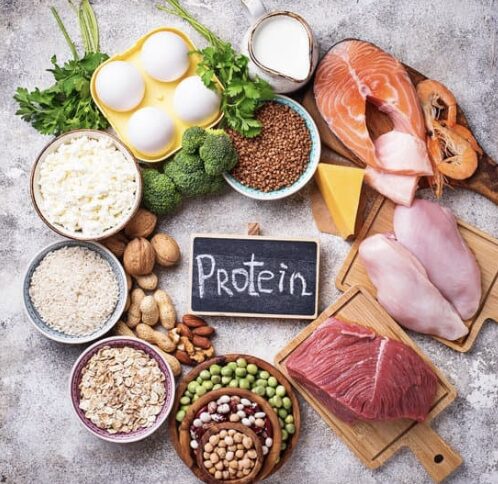
- 3 oz chicken breast = 26g
- 1 scoop whey protein = 20–25g
- 1 cup cooked lentils = 18g
- 2 eggs + 1 oz cheese = 18g
- 1 cup Greek yogurt = 20g
- 1 cup cottage cheese = 28g
- 4 oz tofu = 10g
Even snacks count—try roasted chickpeas, edamame, or a boiled egg with hummus.
Bottom Line from a Doctor
If you’re trying to lose weight, maintain your strength, or age with vitality, protein needs to be a cornerstone of your diet. It’s not just about muscle—it’s about metabolism, mobility, and quality of life.
Pair consistent protein intake (at least 1.2 g/kg/day) with regular resistance training, and you’re investing in a stronger, healthier future. Most importantly, pay attention to your protein needs by age to ensure you’re getting what your body truly requires at each stage of life.
SEO Terms: how much protein per day, protein needs by age, protein and sarcopenia, best protein foods, resistance training and protein, muscle maintenance after 40, high-protein meal
Read Also: Longevity Unveiled: Exploring Peter Attia’s Guide to Healthy Aging
Prerana Sangani, MD, MPH, July 2025
Call The Village Doctor at (650) 851-4747 or Contact us to learn more about the practice.