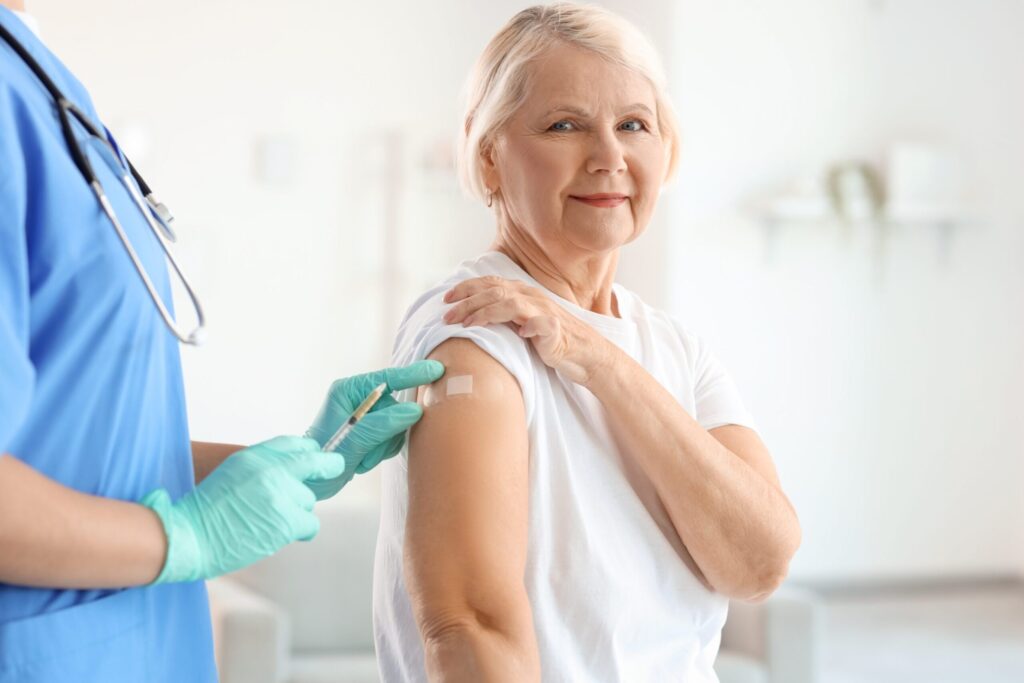

New research suggests the shingles vaccine may do more than prevent a painful rash — it could also protect your heart.. We continue to learn how medical interventions in one area can have wondrous effects in others. In this case, immunizing against that miserable, painful condition called Shingles may lead to reduced heart disease.
If you had chicken pox at any point in your life (and you may not be aware of it from childhood—a simple blood test can tell if you were exposed), then you are at risk from Shingles. The virus that causes chicken pox, varicella-zoster, takes root in your nerves after the initial infection and stays in your body forever.
The virus can erupt from hibernation and travel up nerves to erupt on your skin in very specific patterns, called dermatomes, as painful, blistering rashes. This can occur when you are sick, malnourished, stressed or from other unknown causes that weaken your immune system. What is not commonly known is that the virus can cause inflammation in blood vessels—specifically in the walls of arteries. This includes those in your heart and brain. This can thicken or remodel those walls, and lead to blood clots as well. As a result, this virus potentially can cause stroke or heart attack. That’s a phenomenal concept. And the risk can linger as long as the inflammation lingers.
How do we know that the Shingles vaccine can help?
There are three recent studies, all within the past year or so, providing the evidence. First, The European Society of Cardiology just this past year revealed that a new global systematic review and meta-analysis has shown an association between herpes zoster vaccination, used to prevent shingles, and a statistically significant lower risk of heart attack and stroke.
Herpes zoster vaccination was associated with:
- 8% and 16% reduction in risk of cardiovascular events in adults 18 and 50 years or older, respectively.
- A statistically significant lower risk of stroke and heart attack compared to no herpes zoster vaccination, in both adults ≥18 years and adults ≥50 years.
The research was done with three major scientific literature databases and via a meta-analysis which was rigorously followed.
A second study, released by the Journal of the American College of Cardiology this year (Nguyen et al, herpes zoster vaccination and risk of cardiovascular events in patients with atherosclerotic cardiovascular disease, JACC journals vol 87;13 supplement 30 March 2026 studied almost a quarter of a million patients aged 50 and over and found that in comparing Shringrix or the older Zostavax vaccinated individuals versus unvaccinated ones (with careful balancing of multiple confounding factors and matching of cohorts), between one month and one year post-immunization had a
- 66% reduction of death from all causes
- 32% drop in heart attacks
- 46% less chance of having any serious cardiac event
- 25% reduction in strokes, and
- 25% reduction in heart failure.
This is remarkable data.
In a further report from the European Heart Journal from just this past year, (Lee S,
European Heart Journal, Volume 46, Issue 30, 7 August 2025, Pages 2991–3002, which was done in South Korea, showed that Shingles Vaccine immunization was associated with lower risk of heart attacks and strokes and lasted at least eight years (so far, due to the duration of follow up. It may be much longer as more data comes in). In this study, there was a
- 23% drop in having any cardiovascular event
- 26% drop in a major cardiovascular event including stroke, heart attack or cardiac death.
- 26% drop in heart failure risk
- 22% drop in coronary heart disease risk
Wow.
How Might Immunization Work to Protect against Heart Disease and Stroke?
The best current thought is that preventing the virus from re-emerging from dormancy and invading the blood vessels reduces the overall risk of inflammatory and thrombotic effects. As shingles is believed to induce blood clots in the arteries of the heart and brain, blocking shingles eruptions lowers the risk. So the vaccine itself doesn’t prevent heart attacks and strokes—it prevents the outbreak of the virus, which does the damage.
A Word of Caution
The studies to date are observational. The gold standard is what is known as a Randomized Controlled Study, which is yet to be done. However, these independent studies are consistent and compelling. As the evidence continues to mount, it is becoming rather more clear that Shingles immunization has multiple benefits.
Summary
There is accumulating evidence that immunizing against Shingles not only reduces outbreaks of this miserable condition, but can protect your heart and brain at the same time. This is great news. This vaccine may become a pillar of cardiovascular protection along with blood pressure control, cholesterol-lowering therapy, diabetes treatment and exercise. It’s a tremendous idea.
We, at the Village Doctor, would be delighted to talk more with you about the Shingrix immunization as well as protecting your heart. We are keen to improve your healthspan as well as your lifespan.
Be healthy,
Alan Spira, MD, DTM&H, July, 2026
Protecting yourself against shingles may offer benefits beyond preventing a painful rash—it could also play a role in supporting your long-term heart health. If you have questions about whether the shingles vaccine is right for you, our Bay Area concierge medicine team can provide personalized guidance based on your age, medical history, and risk factors. Contact us today to schedule a consultation and take a proactive step toward protecting your health.
Call The Village Doctor at (650) 851-4747 or Contact us to learn more about the practice.