

The interaction between health and disease is complex. Factors that come into place are nutrition, sleep, nutritional intake, environmental factors, germ exposure, trauma, and underlying functional makeup. The last of this is determined by your genetics and impacts the army within you (the immune system). Genetics also determine your blood type and disease risk. This may be very important as increasing evidence points to your blood type affecting your susceptibility to various diseases. Concierge physicians often have more time than your typical primary care doctors to explain these to you, and you need this time to understand the concepts behind this topic–and how it may very well affect you.
What is Blood Type?
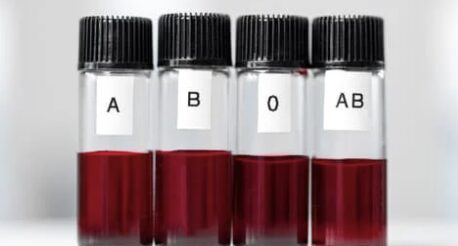
The red blood cells in your blood carry oxygen from the air you breathe to your body and bring carbon dioxide back to the lungs to be exhaled. On these red blood cells are complex molecules called proteins made of amino acids. There are specific proteins which set the red blood cells apart into four different groups. These groups are A, B, AB and O, which are known as the blood types. You may hear of them as the ABO serotypes. The blood type is inherited from your parents, and the genes for these are on chromosome 9. Aside from the major blood type proteins, there are numerous minor ones, but the most significant of those is the Rh type, and one is either Rh positive or negative.
A fascinating aside: humans evolved not only with specific blood types but with antibodies against the other blood types. The blood type proteins are antigens, which are molecules or substances that can provoke an immune response. Considering that there were no blood transfusions before 1667, how did evolution ever develop antibodies to proteins a body had never seen?
In essence, Blood Type A people have anti-B antibodies in their plasma. Type B individuals have anti-A antibodies flowing through their blood. Type AB have no anti-A nor anti-B antibodies. Type O blood has no A or B antigens. Type O people are called Universal Donors as their blood can be given to all other blood types; Type AB folk are universal recipients and can receive blood from anyone.
Which Blood Types are Vulnerable to Which Disease?
Research is showing that different blood types exhibit vulnerability to certain diseases, and the relative risk is often expressed in comparison with Type O blood.
Type A: Coronary heart disease; blood clots; certain infections such as COVID, smallpox, pseudomonas and malaria; cancers (stomach, ovaries, salivary glands, cervix, uterus and colon/rectum, pancreas).
Type B: Coronary heart disease; blood clots; certain infections such as gonorrhea, TB, streptococcal/E.coli/salmonella infections and malaria; cancers (pancreas, liver); diabetes.
Type AB: Coronary heart disease; stroke; certain infections including severe malaria; cognitive impairment and dementia; cancers (pancreas); diabetes.
Type O: Certain Infections such as cholera, TB, E. coli, plague, and mumps; peptic ulcers (it might be protective against malaria); prolonged bleeding (due to lower levels of clotting factors vWF and FVIII); cancers (skin).
Studies on hypertension and hyperlipidemia have yielded mixed results, so no definitive information can be gleaned.
What can you do about it?
Just because your blood type may predispose you to an ailment, it doesn’t mean you’re destined to get it. Some research is inconclusive, and others are contradictory. More research is underway to study this phenomenon and to gain further insight.
What this means is that knowing your blood type gives you–and us–a baseline for watching out for the possibility of future problems. Being alert leads to earlier detection, which leads to earlier cures. Having a concierge physician can help you wade through these murky waters. I invite you to come to The Village Doctor to discuss this interesting issue with any of our physicians. We are here to help and guide you to better healthspan and lifespan.
Wishing you Health and Fitness,
Dr Spira
References
- Abegaz SB. Human ABO Blood Groups and Their Associations with Different Diseases. Biomed Res Int. 2021 Jan 23;2021:6629060. doi: 10.1155/2021/6629060. PMID: 33564677; PMCID: PMC7850852.
- Bruun-Rasmussen P, et al. Associations of ABO and Rhesus D blood groups with phenome-wide disease incidence: a 41-year retrospective cohort study of 482,914 patients. eLife 2023;12:e83116.
- Butler, E.A., et al. ABO and Rh blood groups and risk of infection: systematic review and meta-analysis. BMC Infect Dis 23, 797 (2023). https://doi.org/10.1186/s12879-023-08792-x
- Meian H, et al. ABO blood type and risk of coronary heart disease in two prospective cohort studies. Arterioscler Thromb Vasc Biol. 2012 Aug 14;32(9):2314–2320. doi: 10.1161/ATVBAHA.112.248757.
- Zakai NA, et al. ABO blood type and stroke risk: the REasons for geographic and racial differences in stroke study. J Thromb Haemost. 2014 Apr;12(4):564-70. doi: 10.1111/jth.12507.
- Zindovic I, et al. ABO blood group and the risk of aortic disease: a nationwide cohort study
- BMJ Open 2020;10:e036040. doi:10.1136/bmjopen-2019-036040.
- Fagherazzi Gy, et al. ABO and Rhesus blood groups and risk of type 2 diabetes: evidence from the large R3N cohort study. Diabetologia. 2015 Mar;58(3):519-22. doi: 10.1007/s00125-014-3472-9. Epub 2014 Dec 23.
- Shibeeb S, et al. ABO blood group association and COVID-19. COVID-19 susceptibility and severity: a review. Hematology, Transfusion and Cell Therapy 2021 September; 44(1): 70-75. https://doi.org/10.1016/j.htct.2021.07.006.
Alan Spira, MD, & DTM&H, July 2025
Read Also: Get Your Teenager (and Yourself) to Bed!
Take the first step towards improving your child’s health with pediatric integrative medicine. Call The Village Doctor at (650) 851-4747 or Contact us to learn more about the practice.