
“Snakes! Why Did It Have to Be Snakes?!”
Indiana Jones
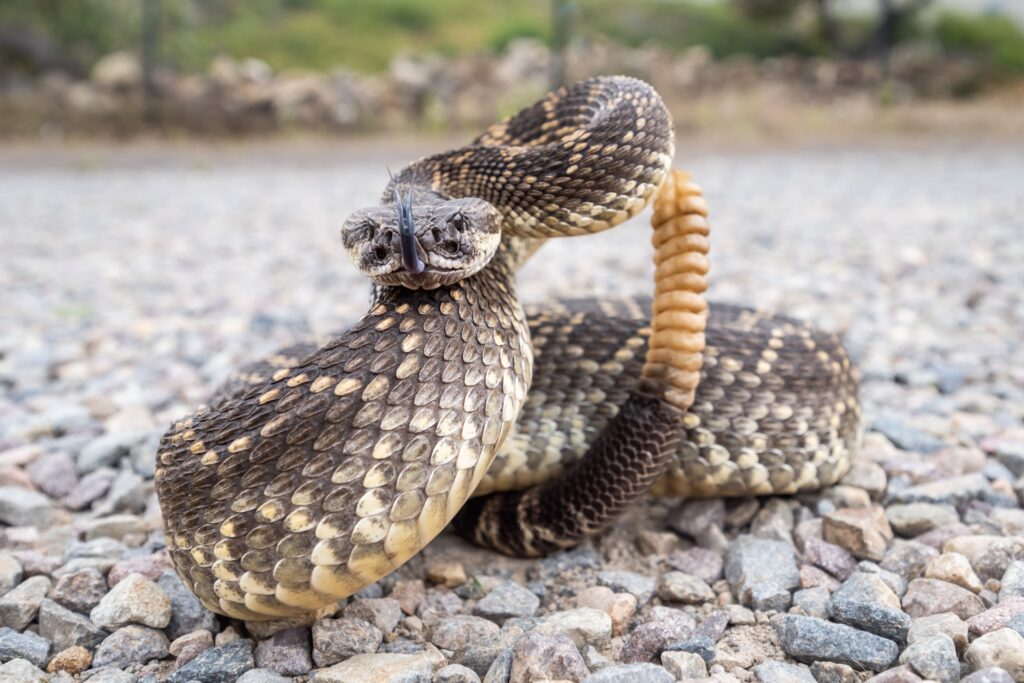
This March’s heat wave took us straight from winter to summer and brought out our legless friends from their winter stupor. Two deaths have occurred in Southern California and one in Northern California recently from rattlesnake bites in hikers. This serves as a reminder that there are hazards in the wild and we need to be alert, even in suburban areas.
Rattlesnake bites are among the most feared outdoor hazards in the United States, particularly in California, where human activity overlaps with native rattlesnake habitats. Rattlesnakes are the most dangerous venomous snakes in the U.S., accounting for most serious injuries and deaths. Despite their reputation, serious outcomes are uncommon when modern medical care is promptly available. Understanding how often bites occur, what the venom does to the body, and how they are treated can reduce fear and improve outcomes.
How Common Are Rattlesnake Bites?
Across the United States, approximately 7,000–8,000 venomous snakebites occur annually, with rattlesnakes responsible for about half of these cases. Nearly half of all bites are actual “dry bites” without venom being injected. However, the younger the snake, the higher the risk as they have not learned to judge how much venom to put into their prey.
Despite this, deaths are rare—about 5 fatalities per year nationwide. The overall incidence is low, roughly 4 bites per 100,000 people annually. Most bites occur in spring through early fall, when both snakes and humans are active outdoors. California is a hotspot for rattlesnake encounters. Roughly 800 snakebites occur annually in California, nearly all from rattlesnakes.
The most common rattlesnake in the San Francisco Bay Area is the Northern Pacific rattlesnake which thrives in grasslands, oak woodlands, chaparral and suburban edges. You can find them in the Peninsula open spaces, Marin headlands, Santa Cruz mountains and the East Bay hills.
Who Gets Bitten?
Men predominate (~80%) and upper extremities (hands/arms) are most commonly bitten. Many bites are provoked (handling or attempting to kill the snake) and alcohol is often implicated.
What Happens When a Rattlesnake Bites?
When a rattlesnake bites, venom is injected through hollow fangs into the tissue, usually the muscle; the danger lies in if a fang lands in a blood vessel and injects venom directly into your bloodstream.
Rattlesnake venom is complex and primarily hemotoxic and cytotoxic, meaning it affects blood and tissues with enzymes causing tissue destruction (necrosis); increased vascular permeability leads to swelling and spread of venom; coagulopathy with impaired blood clotting; and one species, the Mojave Rattler, causing nerve damage like a cobra bite.
Local Effects include immediate pain and swelling, progressive tissue damage, along with bruising and blistering, all of which can begin within minutes and evolve over hours.
Systemic Effects can include nausea, vomiting, weakness, dizziness, bleeding abnormalities, and hypotension or shock in severe cases.
Recognizing a Dangerous Bite
Early signs include fang marks (which may be subtle); rapid onset pain; and swelling spreading from the bite site. Progressive findings include increasing swelling and bruising; lymphatic spread (swelling moving up the limb); systemic symptoms (nausea, weakness). It can be difficult to recognize a serious envenomation in the field and getting to professional medical help is a wise course of action.
Severe Envenomation can include bleeding (from the gums, or the bite site); rapid spread of the swelling or bruising; an altered mental status; and cardiovascular instability. Children often develop more severe symptoms due to smaller body size relative to venom dose.
Treatment: What To Do After a Rattlesnake Bite
Immediate First Aid in the Field
If bitten:
- Call 911 immediately
- Keep the patient calm and still
- Immobilize the affected limb at heart level
- Remove tight clothing or jewelry
- Transport to the nearest emergency department.
Do NOT:
- Do NOT apply a tourniquet
- Do NOT cut the wound
- Do NOT attempt to suck out venom
- Do NOT apply ice
- Do NOT use electricity.
These outdated measures can worsen injury.
Emergency Department Management
In an emergency department, blood tests will be drawn, swelling and bleeding will be monitored and antivenin will be administered if needed. Antivenin (or, Antivenom) is indicated for progressive swelling, systemic symptoms, or coagulopathy. The standard antivenin is Crotalidae polyvalent immune Fab (ovine antivenom). Antivenin will stop progression of tissue damage, reverses coagulopathy and reduce complications.
Emergency Departments will also provide supportive care with intravenous fluids, pain control, and give a tetanus booster if needed.
Prognosis
The outlook for rattlesnake bites in the U.S. is generally excellent. The mortality is <1% with modern care and most patients recover fully. Time to treatment is the most important factor—earlier care dramatically improves outcomes.
Prevention
Most bites can be avoided with simple precautions: stay on clear, established trails; avoid stepping over rocks/logs without visibility; never handle or provoke a snake; wear boots that rise above the ankle and long pants in snake-prone areas; use a flashlight at night
Key Takeaways
Rattlesnake bites are uncommon and rarely fatal in the U.S. California sees hundreds of cases annually, mostly in warmer months. Serious bites causes tissue damage and bleeding abnormalities, yet antivenin is highly effective when given early. The bottom line is that most bites are preventable. The combination of prevention, rapid recognition, and timely treatment ensures that the vast majority of patients recover fully. Feel free to contact your Village Doctor Concierge Physician if you have further questions on this subject. We want to keep you healthy and safe!
Happy Hiking!
Dr. Spira
Alan Spira, MD, & DTM&H, April 2026
Read Also: Home Defibrillators: Should You Have an AED at Home?
Take the first step towards improving your child’s health with pediatric integrative medicine. Call The Village Doctor at (650) 851-4747 or Contact us to learn more about the practice.