


I’m excited to share something that has genuinely energized me lately—both as a physician and as someone who cares deeply about how we live day to day. One of the voices I’ve been listening to is Annie Fenn, MD, a physician and chef who has been writing and teaching about how food can protect our brains and lower the risk of cognitive decline and dementia.
What I love most about Annie’s work is that it’s practical and joyful. Her cookbook is fun, approachable, and full of ideas that make you want to get into the kitchen. Even more importantly, it explains why certain foods are so supportive for brain health. Her philosophy is rooted in using food as daily medicine—meals that reduce inflammation, support healthy blood flow to the brain, and nourish our nervous system over time. In other words, food that truly loves you back.
Much of her work is grounded in research on the Mediterranean diet, which has repeatedly been shown to support memory, focus, and long-term cognitive health. People who eat this way tend to have lower rates of dementia and slower cognitive decline as they age. Annie has also spent time studying Blue Zones, regions of the world where people live longer, healthier lives with remarkably low rates of Alzheimer’s disease. While these cultures differ in many ways, their diets share powerful similarities: an emphasis on vegetables, greens, legumes, nuts, seeds, and whole foods; healthy fats like olive oil; and flavor built from herbs, spices, and citrus rather than sugar or heavy processing.
The takeaway is refreshingly simple. There is no single superfood or perfect diet. Brain protection comes from small, repeatable choices made over time—what we eat most days, not what we eat occasionally. Think of this as something you can do three times a day, without perfection or restriction.
Why Brain-Healthy Recipes Matter for Long-Term Cognitive Health
I want to be clear that the recipes below are not Annie’s exact recipes, but versions I’ve adapted after reading her cookbook and applying her principles at home. They are both simple, delicious, and very much aligned with eating for brain health.
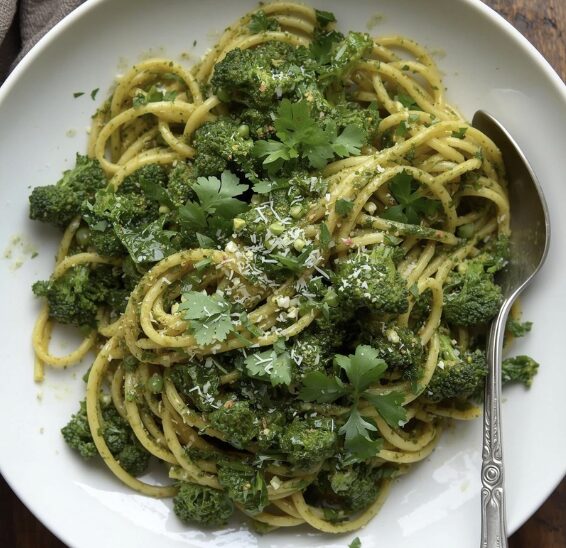
Brain-Healthy Recipes: Broccoli & Kale Pesto Pasta
The first is a broccoli and kale pesto pasta made using parts of the vegetable we often throw away. It’s deeply satisfying, flexible, and works beautifully tossed with any pasta you enjoy.
Why Your Brain Loves It
Dark leafy greens like kale and broccoli are strongly associated with slower cognitive aging. They are rich in nutrients that support brain cells and reduce inflammation. Olive oil supports healthy blood flow to the brain, while seeds provide beneficial fats and antioxidants. This is a wonderful example of how humble ingredients can add up to meaningful brain nourishment.
Ingredients
Stems from 1 head of broccoli
3–4 stalks of kale
3–4 cloves garlic
Juice from half a large lemon
Salt, to taste
Sunflower seeds
Olive oil, 2–4 tablespoons
Directions
Boil broccoli stems in salted water until very tender, about 20–30 minutes. Drain well.
Add broccoli to a food processor along with the kale, garlic, lemon juice, salt, and sunflower seeds. Pulse a few times to coarsely chop.
With the food processor running, slowly drizzle in the olive oil until the mixture becomes a smooth sauce with your desired consistency. This is not an exact science—adjust based on what looks and tastes good to you. Scrape down the sides as needed. Taste and add more salt if necessary. Toss with pasta of your choice.
Brain-Healthy Recipes: Apple Quinoa Pancakes
The second recipe is apple quinoa pancakes. This one feels like comfort food, but it’s quietly doing wonderful things for your brain.
Why your brain loves it
Quinoa provides protein and steady energy without sharp blood sugar swings. Apples contain natural compounds linked to lower inflammation, and spices like cinnamon support metabolic and brain health. These pancakes are naturally sweet, satisfying, and leave you feeling energized rather than sluggish.
Ingredients
3 large eggs
3 tablespoons canola oil or melted butter (any mild-tasting oil works)
1 cup milk (whole or 2% preferred, but other types work well)
4 tablespoons pure maple syrup
1½ cups whole wheat flour (all-purpose can be substituted)
4 teaspoons baking powder
1 teaspoon kosher salt
2 teaspoons ground cinnamon
½ teaspoon nutmeg
2 cups cooked and cooled quinoa (from about ⅔ cup uncooked quinoa)
2 apples, peeled, cored, and finely diced (about 2 cups)
Apple compote, if desired
Instructions
In a large bowl, whisk eggs until blended. Add oil, milk, and maple syrup and whisk until combined.
On top of the wet ingredients, add flour, baking powder, salt, cinnamon, and nutmeg. Gently mix the dry ingredients together before stirring them into the wet mixture.
Stir in cooked quinoa, then fold in the chopped apples.
Heat a nonstick skillet or griddle over medium heat. Pour batter in approximately ¼-cup portions onto the hot skillet. Cook for about 4 minutes, flip, and cook for another 3–4 minutes until golden brown and cooked through. Makes about 24 pancakes.
Serve with warm apple compote, applesauce, cinnamon sugar, or maple syrup.
My hope is that this feels encouraging rather than overwhelming. You don’t need to change everything at once to support your brain. Start by adding one more vegetable to your plate, choosing whole grains more often, cooking with olive oil, or including nuts and seeds in your meals. Small shifts truly do add up.
Your brain is remarkably responsive to how you nourish it, at any age. I hope these ideas inspire you to cook with curiosity and kindness toward yourself. And as always, if you have questions about how to personalize nutrition for your health, I’m here.
Warmly,
Prerana Sangani, MD, MPH, March 2026
Footnote:
Annie Fenn, MD. The Brain Health Kitchen Cookbook.
Read Also: Longevity Unveiled: Exploring Peter Attia’s Guide to Healthy Aging
Call The Village Doctor at (650) 851-4747 or Contact us to learn more about the practice.