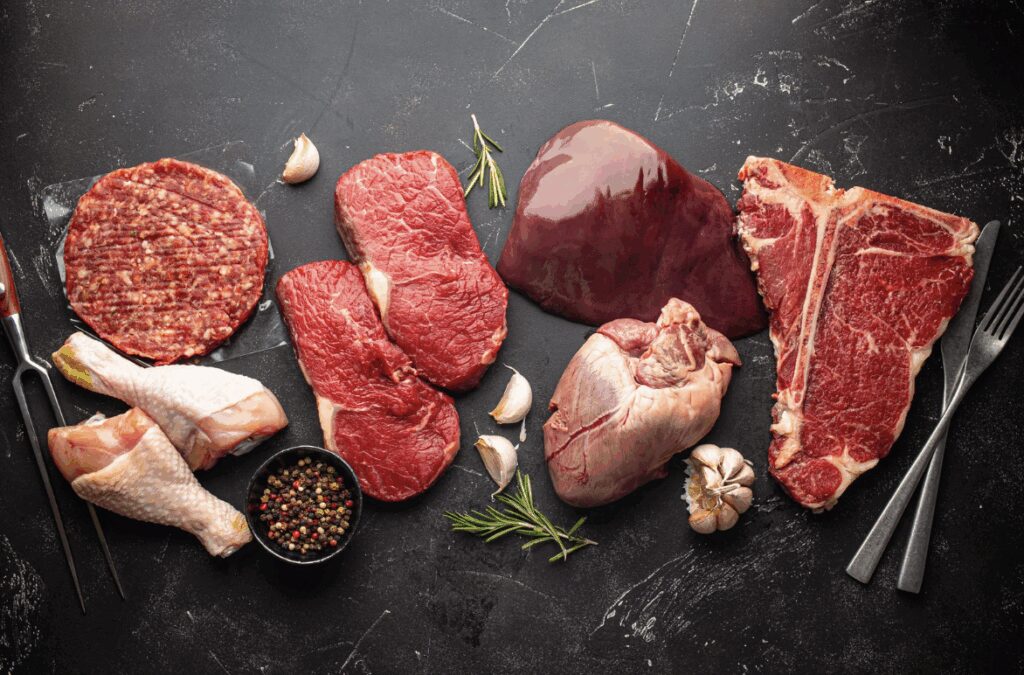

“To eat red meat, or not to eat, that is the question.”
Most people don’t realize that Shakespeare originally wrote this, but a typo by a scribe changed the entire play. The original point was lost to history. It’s true. You can Google it.
So why the controversy?
There is a large number of conflicting scientific studies regarding the health benefits or detriments of red meat. It has been blamed for heart disease, diabetes, and cancer, though studies on either side conflict. Today, I’d like to focus on a little-discussed but interesting theory as to why red meat may be dangerous to one’s health. We’ll still talk about heart disease and diabetes.
Red Meat and Cancer
There are simple sugars (monosaccharides) called sialic acids, found on cell surfaces, which are fundamental for cell-to-cell interactions. There are two sialic acids we want to know about—hang in with me–Neu5Gc (formally known as N-glucolyneuraminic acid) and Neu5Ac (N-acetylneuraminic acid). Neu5Gc, for you chemistry geeks, is the hydroxylated version of Ne5Ac. The latter, let’s call it Ac, is native to human cells, but the former, Gc, is not, though it is found widely on other mammalian cells. Gc is, however, incorporated into human cells through ingesting foods, especially red meat (notably beef, pork, lamb, and even cow’s milk products). Plants and poultry do not carry Gc, and there are very small amounts in fish. There are gut bacteria that take Gc and change them into more complex sugars (lipooligosaccharides), which lead to the creation of antibodies that can attack Gc. Studies in mice (not little humans, it should be noted) have shown that the antibody attacks on human cells can lead to tumors with elevated levels of Gc in those tumors, and anti-Gc antibodies are used as tumor markers. There is also elevated inflammation from this response. The process is called Xenosialitis. This is the basis of the sialic acid theory of cancer. The cancer most associated with red meat consumption is colorectal cancer, but that is with very high daily consumption of meat (>160 grams/day) and more likely with processed than unprocessed meat. Other cancers with a statistically higher risk from high consumption of red meat include esophageal, gastric, prostate, and endometrial cancers. Please remember that while very interesting, this is still a hypothesis and not yet a fact.
Red Meat Allergy
Yes, you can develop an allergy to red meat. This condition is called the Alpha-Gal Syndrome (AGS). This condition develops after a tick (usually the Lone Star Tick, Amblyomma americanum, found in the southern, eastern, and central USA) bites and injects a sugar molecule, the “alpha gal” (galactose-𝛂-1,3-galactose) through its saliva which leads to an allergic reaction when the person later eats red meat–or other mammalian products such as dairy products, gelatin and certain pharmaceuticals. The condition has also been found in Europe, Australia, Japan, and South Africa. Unlike typical food allergies, the reaction is delayed by several hours after consumption. The symptoms include itching, nausea and vomiting, hives, abdominal pain, shortness of breath, and in the worst cases, anaphylactic shock.
Other Issues
Red meat consumption has been linked to increased risk of coronary heart disease and type 2 diabetes, stroke, and mortality. In research studies showing these links, it should be noted that, as with sialic acid Gc, large amounts of meat were consumed, often more than 100 grams daily (3.5 oz). Interestingly, occasional meat eaters have lower mortality rates. Come into the The Village Doctor to have a chat with your concierge physician if you want to delve deeper.
Conclusion
The risk of red meat and cancer is theoretical, but the research is suggestive. As for consuming red meat, the association with cardiovascular disease and diabetes is inconsistent; there is no clear link. If you enjoy red meat, then enjoy it in moderation. I do. Let’s have a discussion about whether your situation is different and if a dietary change could help your health. You are welcome at The Village Doctor.
Wishing you good health and good eating,
Alan Spira, MD, & DTM&H, August 2025
References:
- Alisson-Silva F, et al. Human risk of disease associated with red meat intake: Analysis of current theories and proposed role for metabolic incorporation of non-human sialic acid. Mol Aspects Med. 2016 Oct:51:16-30. doi: 10.1016/j.mam.2016.07.002.
- Samraj AN, et al. Involvement of a non-human sialic acid in human cancer. Front Oncol. 2014 Feb 19:4:33. doi: 10.3389/fonc.2014.00033. eCollection 2014.
- doi: 10.1111/joim.12543
- Wolk A. Potential health hazards of eating red meat (Review). J Intern Med 2017; 281: 106–122.
- Richi EB, et al. Health risks associated with meat consumption: A review of epidemiological studies. Int. J. Vitam. Nutr. Res., 85 (1 – 2), 2015, 70 – 78.
- Gonzalez, et al. Diet and cancer prevention: contributions from the European prospective investigation into cancer and nutrition (EPIC) study. Eur J Cancer 2010;46:2555-2562.
- Young I et al. Tick exposures and alpha-gal syndrome: A systematic review of the evidence,
- Ticks and Tick-borne Diseases, 2021; 12(3): https://doi.org/10.1016/j.ttbdis.2021.101674.
- Shi W, et al. Red meat consumption, cardiovascular disease and diabetes: a systemic review and meta-analysis.. 2023 Jul 21;44(28):2626-2635. doi: 10.1093/eurheartj/ehad336.
- Key TJ, et al. Mortality in vegetarians and non-vegetarians: detailed findings from a collaborative analysis of 5 prospective studies. Am J Clin Nutr 1999;780: 516s-524s.
- Johnston BC, et al. Unprocessed Red Meat and Processed Meat Consumption: Dietary Guideline Recommendations From the Nutritional Recommendations (NutriRECS) Consortium. Ann Intern Med.2019;171:756-764. [Epub 1 October 2019]. doi:10.7326/M19-1621.
Read Also: Get Your Teenager (and Yourself) to Bed!
Take the first step towards improving your child’s health with pediatric integrative medicine. Call The Village Doctor at (650) 851-4747 or Contact us to learn more about the practice.