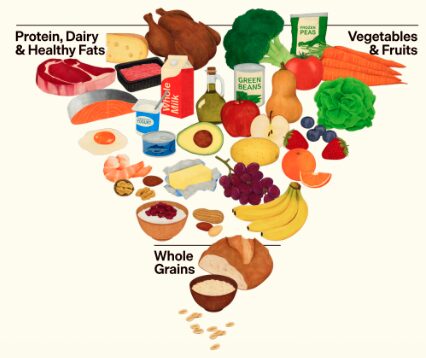

The new year is upon us, and it has come with a very significant change in the fundamental health recommendation about your diet from both the US Department of Health & Human Services and the Department of Agriculture. The food pyramid we have been used to for so many years has been turned on its head, and the very basic advice on how we should eat has been radically changed.
This is good news.
The details are coming below, but first, and for the first time, the government is finally viewing food as medicine. This is important. The Chinese and Indians have done this for thousands of years, and it is about time we had the same approach. What you put inside you significantly affects how good your health will be and how good you feel. In complementary medicine circles, your diet may be modified according to your symptoms and condition. Starting off with the proper nutrition can help avoid having to deal with health abnormalities later.
The previous health recommendations, in combination with the commercial food industry making highly processed foods, have contributed to the deterioration of the health of the average American, with shocking rises in chronic diseases such as diabetes and obesity which have led to rampant heart disease, hypertension, strokes, kidney failure, joint pains and arthritis, eye disease, and a host of other medical issues, not to mention fatigue and weakness.
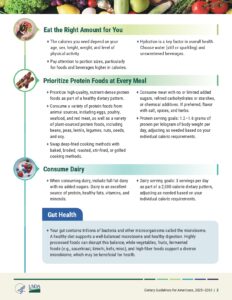
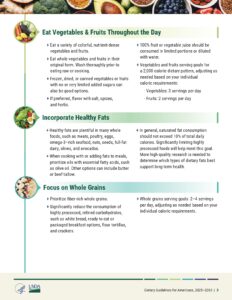
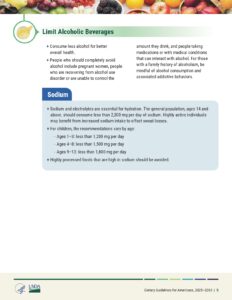
The new emphasis will be on whole, nutrient-dense foods focused on protein, dairy, vegetables, fruits, healthy fats, and whole grains (not processed ones). The new priorities are to prioritize protein at every meal; consume full-fat dairy (with no added sugar); consume whole vegetables and fruits throughout the day; eat healthy fats from whole foods (meat, seafood, eggs, nuts, seeds, olives and avocados); eat whole grains, and avoid refined ones; limit all highly processed foods, foods with added sugars and artificial additives; eat what you need, based on your age, gender, size and activity level; hydrate adequately with water and unsweetened beverages; and limit drinking alcohol.
The Stanford Loop published the following commentary on the new guidelines in its December 13th edition: “U.S. health officials have released new dietary guidelines, standards that inform meal planning for schools, hospitals, and prisons. Christopher Gardner, a professor of medicine at the Stanford Prevention Research Center who studies the effect of dietary changes on health, said that the new guidelines got many things right: Americans are encouraged to limit highly processed foods and eat lots of fruits and vegetables. Some things, however, are different, and “the parts that are different aren’t clear,” he said. Recommendations for protein intake have been increased, with a tilt toward red meat. “That goes against decades and decades of evidence and research,” Gardner told NPR. He recommends plant-based sources of protein, including beans, which contain protein but also fiber—something many Americans don’t get enough of. Additionally, red meat is high in saturated fat. Gardner believes this introduces confusion. The new guidelines recommend people limit saturated fat to 10 percent of their daily calories. But the promotion of red meat, full-fat dairy, and cooking with beef tallow and butter makes for a diet that would easily surpass that measure, said Gardner. “They’re saying two different things in the same set of guidelines that are inconsistent.”
You can read the full article “Say Cheese” in The Stanford Loop here or listen to (or read) the NPR Interview here.
The new guidelines are not a strict diet but a flexible framework to guide you toward better health, especially targeting children who have the poorest diets in America, as they are targeted the most by the industrial food complex.
This set of recommendations has been used by athletes and those with a focus on healthspan as well as longevity. This means that it already has a track record and isn’t as radical a change as it appears on the surface. The radicalness, if you will, is that it is now being recommended to all Americans, not just those already devoted to health and fitness.
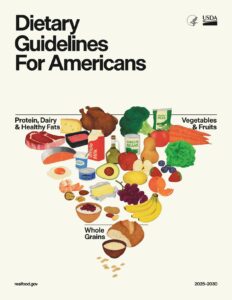
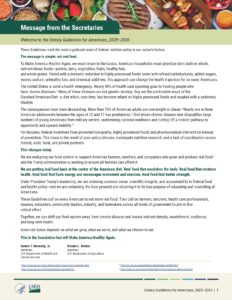
Some images from the new official Dietary Guidelines for Americans are below, for you to keep and refer to, and the link to the entire document is here.
We, as concierge physicians at The Village Doctor, are more than happy to help guide you through the recommendations should you have any questions or concerns. I feel that these new guidelines are sensible and will help improve the health of all Americans.
Wishing you The Best of Health,
Dr. Spira
Alan Spira, MD, & DTM&H, January 2026

Read Also: Get Your Teenager (and Yourself) to Bed!
Take the first step towards improving your child’s health with pediatric integrative medicine. Call The Village Doctor at (650) 851-4747 or Contact us to learn more about the practice.