

Few things prompt parents to call their pediatrician faster than a new rash. Children’s skin is more sensitive than adult skin, and their immune systems are meeting many viruses for the first time. The good news is that most rashes are harmless and clear on their own. A few, however, signal an infection or allergic reaction that needs prompt care. Knowing what to look for helps you stay calm and act quickly when it matters.
What Causes Rashes in Children?
Most childhood rashes fall into a handful of categories:
- Viral infections, the most common cause of a widespread rash with fever
- Bacterial infections, such as impetigo or scarlet fever
- Allergic reactions to foods, medicines, or insect stings
- Skin irritation from moisture, friction, soaps, or fragrances
- Heat and sweat
- Ongoing skin conditions, such as eczema
Common Rashes in Children and What They Look Like
One note first: on darker skin tones, “redness” may look purple, brown, or gray. Pay attention to texture, swelling, and how your child is acting.
Eczema
Dry, rough, very itchy patches that usually begin before age 2. In babies, eczema favors the cheeks and scalp; in older children, the creases of the elbows and knees. It comes and goes and is managed with daily moisturizing. Call us if it disturbs sleep, is not improving, or starts to ooze or crust.
Diaper Rash
Red, irritated skin where the diaper touches, caused by contact with urine and stool. Most cases improve within a few days with frequent changes and a barrier cream. A bright red rash in the skin folds with small bumps around the edges may be yeast and deserves a visit.
Heat Rash (Prickly Heat)
Tiny red bumps or clear, pinpoint blisters in skin folds or under snug clothing, caused by blocked sweat glands. It clears once the skin is cooled.
Hives (Urticaria)
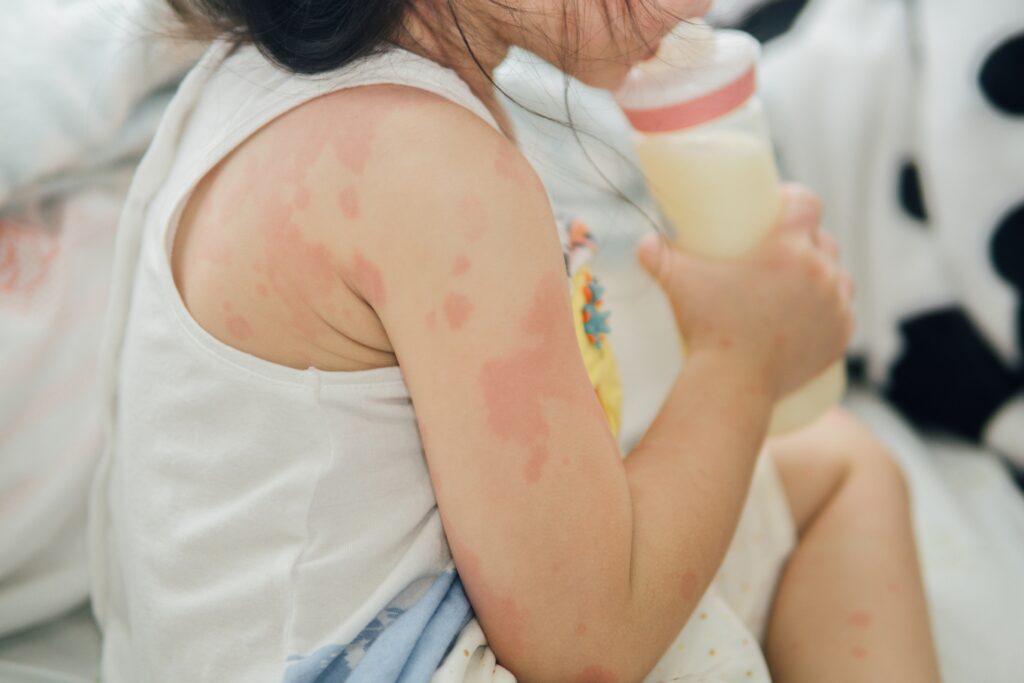
Raised, itchy welts that move around and change shape over hours. In children, the most common trigger is a viral illness rather than an allergy. Hives alone are rarely dangerous, but please call us. Hives with breathing trouble or other symptoms are an emergency (see below).
Newborn Rashes
Milia (tiny white bumps), newborn acne, and erythema toxicum (blotchy red spots with small yellow-white bumps in the first days of life) are harmless and fade without treatment. However, any newborn with blisters, pus-filled bumps, fever, poor feeding, or unusual sleepiness should be seen right away.
Viral Rashes in Children: Common Childhood Illnesses That Cause a Rash
Many viruses cause a rash along with fever, tiredness, runny nose, or cough. Antibiotics do not help; care focuses on fluids, rest, and comfort.
Roseola
Several days of high fever in a baby or toddler, followed by a pink rash on the chest and belly as the fever breaks. By the time the rash appears, most children are feeling better.
Chickenpox
Itchy spots that turn into fluid-filled blisters and then crust over, appearing in waves so that new and old spots are seen together. It is far less common thanks to vaccination. Call us if you suspect it.
Hand, Foot, and Mouth Disease
Painful mouth sores with small blisters on the hands, feet, and often the diaper area. It usually resolves in 7 to 10 days. The main concern is dehydration, because drinking hurts.
Measles
High fever, cough, runny nose, and red eyes for a few days, followed by a rash that starts on the face and spreads downward. Measles is serious and extremely contagious. Please call before coming in so we can protect other patients. The MMR vaccine is the best protection.
When to Worry About a Rash: Signs Your Child Needs Medical Attention
Trust your instincts. A child who looks sick concerns me more than any particular rash.
Rash With a Fever
This is often viral, but it is worth a call, especially if the fever lasts more than a few days, your child seems unusually ill, or there is a sore throat with a rough, sandpaper-like rash (possible scarlet fever). Any fever of 100.4°F (38°C) or higher in a baby under 3 months needs immediate evaluation.
A Rash That Does Not Fade When Pressed
Press a clear glass firmly against the spots. Most rashes fade. Pinpoint red or purple spots, or bruise-like patches, that do not fade can signal a serious bloodstream infection, especially with fever or a child who looks unwell. Go to the emergency room or call 911.
Rash With Signs of Meningitis
Seek emergency care for a rash and fever with severe headache, stiff neck, sensitivity to light, confusion, or difficulty waking. Babies may show only poor feeding, irritability, or limpness.
Signs of a Severe Allergic Reaction
Hives together with trouble breathing, wheezing, swelling of the lips or tongue, repeated vomiting, or faintness can mean anaphylaxis. Use your child’s epinephrine if one has been prescribed and call 911. Antihistamines are not a substitute.
A Rash That Spreads Quickly or Looks Infected
Call us the same day for rashes that spread rapidly, blister or peel, or become painful, warm, swollen, pus-filled, or covered in honey-colored crusts.
How to Treat Common Rashes in Kids at Home
Treatment depends on the cause, so when you are unsure, ask first. Many mild rashes need only gentle skin care.
Over-the-Counter Treatments for Childhood Rashes
- Moisturizers: Thick, fragrance-free creams or ointments, applied at least twice daily and after bathing, are the foundation of eczema care.
- Barrier creams: Zinc oxide or petroleum jelly at every diaper change.
- Medicated creams: Check with us before using hydrocortisone on a child under 2, on the face or diaper area, or for more than a week. Please also ask before using antifungal or antibiotic creams or giving antihistamines to young children. Never give aspirin to a child.
Keeping Your Child Comfortable While a Rash Heals
- Keep skin cool and dry; use short, lukewarm baths and pat dry.
- Choose loose, breathable cotton clothing.
- Avoid scented soaps, detergents, and bubble baths.
- Trim fingernails and use cool compresses to limit scratching.
- Offer plenty of fluids.
When in doubt, please call us. We are always happy to have a look so that you don’t have to worry at home.
This article is for general education and is not a substitute for medical advice about your child.
Sky Pittson, MD, November 2026