
The bad news is that bone loss is silent. There is no pain, no warning sign, and no symptom, right up until a wrist, hip, or spine fracture makes it impossible to ignore. The good news is that bones are living tissue. They are constantly being broken down and rebuilt, which means what you do today can change what your bones look like ten years from now.
Think of your bones like a bank account. Through your twenties, you are making deposits and building your peak bone mass. After that, withdrawals start to outpace deposits, and for women, the withdrawals speed up around menopause. The goal is simple: build up the balance you can, and stop the unnecessary spending.
Osteopenia vs. Osteoporosis
Bone density is measured with a quick, painless scan called a DEXA scan, and the result is reported as a T-score. In a nutshell:
- Normal: a T-score of -1.0 or higher
- Osteopenia: a T-score between -1.0 and -2.5
- Osteoporosis: a T-score of -2.5 or lower
Osteopenia means your bone density is lower than ideal, but not yet low enough to be called osteoporosis. Think of it as a yellow light, not a red one. It is not a disease, and it is not a reason to panic, but it is a reason to pay attention. In fact, because so many more people have osteopenia than osteoporosis, a large share of fractures happen in people who fall in the osteopenia range.
Osteoporosis means the bone has thinned enough that it breaks much more easily, sometimes from something as small as a cough, a sneeze, or a fall from standing height. A doctor can also diagnose osteoporosis after a fragility fracture, even when the T-score is better than -2.5.
Why Bones Weaken: Risk Factors You Can and Can’t Change
Some risk factors are fixed, and some are firmly in your control. I find it helps to look at both lists, because it is easy to feel powerless about the first and forget how much power you have over the second.
What you can’t change:
- Being female
- Getting older
- Going through menopause (estrogen protects bone, and its decline speeds up bone loss)
- A family history of osteoporosis or hip fracture
- A small or thin body frame
- Ethnicity: Asian women are recognized as a higher-risk group
What you can change:
- Low calcium and vitamin D intake
- Too little weight-bearing exercise
- Smoking
- Excessive alcohol
- Being underweight
That second list is where your daily choices pay off.
Why Asian American Women Are at Higher Risk
This is a topic I care about, and unfortunately, it is under-discussed. On average, Asian American women reach a lower peak bone mass and tend to have smaller, thinner frames, so they start with a smaller bank balance. Many also get less calcium than they need. Dairy is not a traditional staple in many Asian diets, and lactose intolerance is common, so calcium intake often runs low without anyone noticing. Vitamin D can fall short too, especially for those who avoid the sun or have darker skin.
Then there is the screening gap. Asian American women are frequently not screened, partly because the assumption is that they are healthy and active, and partly because osteoporosis is still thought of as a condition of older white women. Asian American is also a very broad label, and risk varies from person to person. But if you are an Asian American woman, please do not wait for a fracture to start this conversation. Bring it up with your doctor.
How to Increase and Protect Bone Density
Here is what the evidence supports, in order of impact.
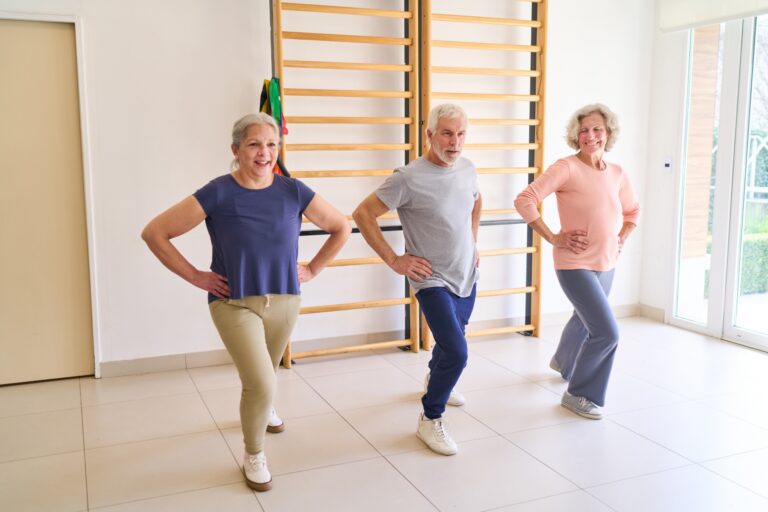
- Move in ways that load your bones. Bones get stronger when you challenge them. Aim for weight-bearing activity like brisk walking, dancing, stair climbing, or hiking on inclines, plus strength training with weights, bands, or your own body weight two to three times a week. Swimming and cycling are wonderful for your heart, but they do not load your bones much. If you already have osteoporosis, ask your doctor or a physical therapist about safe techniques, especially avoiding twisting under load.
- Get enough calcium, food first. Most women need about 1,000 mg a day, rising to 1,200 mg after age 50. Food is the best source: dairy or fortified soy milk, tofu, leafy greens like bok choy or kale, broccoli, canned fish with the bones (sardines, salmon), and fortified foods. If you fall short, a supplement can fill the gap. Keep doses to about 500 to 600 mg at a time, and more is not better, since your total from food and pills combined is what counts.
- Optimize vitamin D. Vitamin D is what lets your body absorb calcium. Most adults need at least 600 to 800 IU a day, but many people need more. The best approach is to check your blood level and dose to it rather than guess.
- Don’t forget protein. Bone is not just calcium. It is also a protein framework. Many older adults do well with roughly 1.0 to 1.2 grams of protein per kilogram of body weight each day, unless you have kidney disease or your doctor has advised otherwise. Eggs, fish, tofu, beans, nuts, poultry, and yogurt all count.
- Cut the bone-robbers. Smoking and heavy drinking (more than about one drink a day for women) both weaken bone. If you smoke, quitting is one of the best things you can do for your bones. Being underweight also matters, so restrictive dieting is not a bone-healthy plan.
- Prevent falls. Strong bones help, but not falling helps even more. Practice balance (tai chi and yoga are great options), get your vision checked, clear tripping hazards like loose rugs, make sure your home is well lit, and ask your doctor or pharmacist if any of your medications cause dizziness.
Can Bone Loss Be Reversed?
The honest answer: it depends on where you are starting.
Early bone loss, or osteopenia, can often be stopped and sometimes partly reversed with exercise and good nutrition. Established osteoporosis usually cannot be fully cured. But that does not mean you are stuck. With the right combination of lifestyle changes and, when appropriate, medication, bone density can improve and the risk of fracture can drop significantly. The goal is not a perfect scan. The goal is to keep you strong, upright, and independent.
When Should You Get a Bone Density (DEXA) Test?
Guidelines recommend a DEXA scan for all women at age 65. Earlier screening is recommended for postmenopausal women with added risk factors, such as a family history, a low body weight, smoking, long-term steroid use, or a prior fracture after age 50. Losing more than an inch and a half of height is another reason to ask. Because of their risk profile, many Asian American women should talk with their doctor about screening earlier than 65.
The test takes about 10 to 15 minutes, involves very little radiation, and does not hurt.
Should You Look Into Medications?
Lifestyle is the foundation, but sometimes it is not enough. It may be time to talk with your doctor about medication if you have osteoporosis on your DEXA, if you have had a hip or spine fracture, or if you have osteopenia and a high estimated 10-year fracture risk. Doctors often calculate that risk with a tool called FRAX.
There are several types of medication. There is evidence that estrogen started within 10 years of menopause can preserve bone density. Bisphosphonates (like alendronate) are the most commonly used and slow bone breakdown. Other options, such as denosumab, work in a similar way. For people at very high risk, there are bone-building medications (like teriparatide, abaloparatide, and romosozumab). Every medication has benefits and trade-offs, including rare side effects, and some have special instructions, such as not stopping denosumab abruptly. This is a decision to make together with your doctor, based on your own numbers and history. If you are on medication already, do not stop it without talking to your doctor first.
The Bottom Line
Your bones are not a fixed thing you are born with. They are a living system that responds to how you treat it. Some risk factors, like age, sex, genetics, and ethnicity, are out of your hands. But movement, calcium, vitamin D, protein, and avoiding smoking and excess alcohol are all in your hands, and they add up. Do not wait for a fracture to start paying attention. Know your risk, get screened when it is time, and ask questions.
If you take one thing from this article, let it be this: it is never too early, and it is never too late, to protect your bones.
Frequently Asked Questions
What is the fastest way to build bone density? There is no overnight fix, but the fastest effective route is combining weight-bearing or higher-impact movement with regular strength training, while making sure your calcium and vitamin D are adequate. Expect changes over months to years, not days.
Are Asian American women at higher risk of osteoporosis? Yes. On average, they have lower peak bone mass, smaller body frames, and often lower dietary calcium and vitamin D, and they are frequently under-screened. It is a manageable risk with attention to nutrition, exercise, and timely screening.
Can osteoporosis be reversed? Early bone loss (osteopenia) can often be stopped and partly reversed with exercise and nutrition. Established osteoporosis usually can’t be fully cured, but lifestyle changes plus medication (when appropriate) can rebuild bone density and greatly reduce fracture risk.
Is osteoporosis genetic? Genetics play a significant role. They shape your peak bone mass, and a family history raises your risk. But modifiable factors like exercise, calcium, vitamin D, and not smoking still make a meaningful difference.
What are the best supplements for bone density? Calcium (to fill gaps left by diet) and vitamin D (to help absorb it) are the foundation. Dose vitamin D to your blood level. Supplements support a bone-healthy diet and exercise; they don’t replace them.
When should I get a bone density test? All women at 65, and earlier for postmenopausal women with added risk factors. Because of their risk profile, many Asian American women should discuss earlier screening with their doctor.
How can I increase bone density after 60? The same principles work: regular strength and weight-bearing exercise (adapted for safety), adequate calcium and vitamin D, fall prevention, and medication if your DEXA warrants it. It’s never too late to protect what you have.
Angela Jiang, MD; October 2026
Have Questions About Your Bone Density?
If you have questions about how to increase bone density or protect your bone health as you age, our Bay Area concierge medicine team can provide personalized guidance based on your health history, lifestyle, and individual risk factors. We can help you understand bone density testing, discuss strategies to support bone strength, and explore ways to reduce your risk of osteoporosis and fractures. Contact us today at (650) 851-4747 or Contact us to schedule a consultation and take a proactive approach to your long-term bone health.