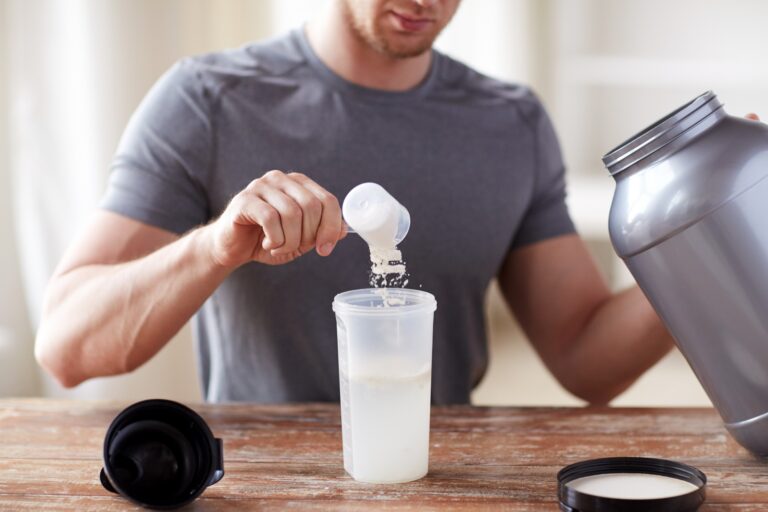



For years, creatine was filed away as a supplement for bodybuilders and teenage boys at the gym. That reputation is now badly outdated. With more than 500 peer-reviewed studies behind it, creatine has become one of the best-understood compounds in nutrition science, and some of the most interesting recent research is specifically in women, where it may support strength, bones, the brain, and mood across the lifespan.
What is Creatine
Creatine is a compound your body makes naturally in the liver, kidneys, and pancreas from three amino acids. You also get it from food, mainly red meat, poultry, and fish. About 95% of it is stored in your muscles as phosphocreatine, where it acts as a rapid energy reserve, helping to regenerate ATP, the molecule your cells burn during short, intense efforts (Cleveland Clinic).
Do Women Make Less Creatine Than Men?
Women tend to have lower creatine stores than men, partly from lower muscle mass and partly from eating less red meat on average. Women who eat little or no meat (vegetarians and vegans) start lower still, and tend to respond the most to supplementation (Mayo Clinic). In other words, many women are the people most likely to notice a difference after taking a creatine supplement.
What Does Creatine Do for a Woman’s Body?
Research shows the benefits fall into two buckets: things the evidence strongly supports, and promising areas still being studied.
Strongly supported:
- Strength and lean muscle. When paired with resistance (strength) training, creatine reliably increases strength, power, and lean muscle mass. This is the single most robust finding in the literature, confirmed across many randomized trials and endorsed by the International Society of Sports Nutrition. The key phrase is paired with training. Creatine amplifies the work you do; it doesn’t replace it.
- Healthy aging and muscle preservation. From our 30s onward, we gradually lose muscle, which can lead to falls, frailty, and loss of independence later in life. Creatine plus strength training helps older adults gain more muscle, strength and functional capacity than training alone, making it a genuinely useful longevity tool, not just a gym aid.
Promising and emerging:
- Bone health. Combined with resistance training, creatine may help support bone health, a priority for women, whose fracture risk climbs after menopause.
- Brain health and cognition. The brain is an energy-hungry organ, and creatine helps buffer its energy supply. Studies suggest benefits for memory, reaction time, and mental fatigue, particularly under stress, sleep deprivation, aging, and in people with lower baseline stores (Cedars-Sinai).
- Mood. Early trials, several in women, suggest creatine may enhance the response to standard antidepressant treatment. This is still preliminary, but promising.
Creatine Through Perimenopause and Menopause
This is where creatine gets especially interesting for women. As estrogen declines in perimenopause and menopause, the body appears to store and use creatine less efficiently, at exactly the time women are also losing muscle and bone and often noticing more brain fog and fatigue. A lifespan review of creatine in women’s health concluded that supplementation — alongside resistance training — is a safe, low-cost strategy that may help preserve muscle, strength, bone, and cognitive function during this transition.
It is not a replacement for the foundations (strength training, protein, sleep, and, where appropriate, hormone therapy discussed with your doctor) — but it’s a small, evidence-based addition that complements all of them.
Will Creatine Make me “Bulky,” Bloated, or Gain weight?
No — not in the way most women worry about. Creatine doesn’t contain calories or hormones and doesn’t cause fat gain. Some people see a small rise on the scale in the first week or two—usually 1–2 pounds of water drawn into muscle cells, which is part of how it helps them work better. It’s intracellular water, not the puffy, “bloated” look, and it’s not fat (ISSN). Building visible muscle takes months of consistent strength training; a scoop of creatine won’t do it alone.
Is Creatine Supplementation Safe for Women? The Kidney, Hair Loss and Other Myths
Creatine monohydrate has one of the strongest safety profiles of any supplement, with healthy adults studied safely for years at normal doses. The persistent myths don’t hold up:
- “It damages your kidneys.” In healthy people, studies show no evidence of kidney harm at recommended doses. The confusion comes from the fact that creatine can slightly raise serum creatinine on a blood test, but that’s a harmless by-product of muscle metabolism, not a sign of kidney damage. (It’s worth telling your doctor you take creatine so a mildly elevated reading isn’t misread.)
- “It causes hair loss.” This traces back to a single 2009 study that found a rise in DHT, a hormone linked to hair loss, but that study never measured actual hair loss, and no later research has confirmed any link.
- “It’s a steroid.” It isn’t. Creatine is a naturally occurring compound found in everyday foods, and it’s permitted by the IOC and NCAA.
Who should check with a doctor first: anyone with kidney disease or reduced kidney function, anyone who is pregnant or breastfeeding, people with bipolar disorder, and anyone on regular medication, a quick conversation makes sure it’s right for you.
How To Take Creatine: Dose, Timing and Which Type
- Which type: Creatine monohydrate. It’s the most studied, most effective, and cheapest form. Fancier “HCl,” “buffered,” or gummy versions cost more without proven advantages. Choose a product that’s third-party tested (look for NSF Certified for Sport or Informed Sport on the label).
- How much: 3–5 grams per day, every day. Not just days you exercise. That’s the standard effective dose for women.
- Do I need to “load?” No. A loading phase (around 20 g/day split into four doses for 5–7 days) saturates muscles faster for athletes who want quick results, but it isn’t necessary. At 3–5 g/day, your muscles fully saturate in about 3–4 weeks.
- When: Timing is flexible. The total daily habit matters far more than the exact hour of the day. Many people take it with a meal or a post-workout shake; taking it with some carbohydrate may modestly help uptake. Consistency is everything, because the benefits come from keeping your muscles topped up over time.
- How long until it works: For strength and training benefits, expect to notice changes over 4–6 weeks of consistent use alongside training.
The Bottom Line
Creatine has quietly earned its place as a safe, cost-effective, best-evidenced supplement we have, and the case for women, in particular, keeps getting stronger. For most healthy women, especially those strength-training or moving through perimenopause and menopause, 3–5 g of creatine monohydrate a day is a small, sensible addition to a good foundation of exercise, protein and sleep.
It isn’t magic, and it isn’t a substitute for the basics or for personalized medical care. But it’s a rare example of a supplement where the science is solid. If you’d like to know whether creatine fits your health picture, and how it sits alongside your labs, medications and goals, that’s exactly the kind of personalized question our physicians help with.
Frequently Asked Questions
What does creatine do for a woman’s body? It helps your muscle cells regenerate energy quickly, which, paired with strength training, supports muscle, strength, and bone, and may benefit brain energy, memory, and mood. Women often have lower natural creatine stores than men, so many respond well to supplementing.
How much creatine should a woman take? 3–5 grams of creatine monohydrate per day, taken consistently. A loading phase isn’t necessary.
Does creatine make you gain weight or look bloated? It can add 1–2 pounds of water inside the muscle in the first couple of weeks, which supports performance. It does not cause fat gain or a bloated appearance, and it won’t make you “bulky.”
Is creatine safe for women long-term? For healthy women, yes — it has a strong long-term safety record at recommended doses. Check with your doctor first if you have kidney disease, are pregnant or breastfeeding, or take regular medication.
Can I take creatine during perimenopause or menopause? Yes, and this may be one of the most useful times to. As estrogen falls, the body uses creatine less efficiently while muscle, bone, and cognition are under pressure — so creatine plus strength training is a reasonable, evidence-based support. Discuss it with your physician as part of your overall plan.
Does creatine cause hair loss? There’s no good evidence that it does. The myth comes from one small 2009 study that measured a hormone (DHT), not actual hair loss, and no study since has shown a real link.
When is the best time to take creatine? Whenever you’ll remember it daily — timing matters far less than consistency. With a meal or after a workout is fine.
How long does creatine take to work? At 3–5 g/day, muscles saturate in about 3–4 weeks; you’ll typically notice strength and training benefits over 4–6 weeks of consistent use.
Wishing you the best of health,
Dr Spira
Alan Spira, MD, DTM&H, October 2026
Curious whether creatine is right for you?
The Village Doctor can provide personalized, evidence-based guidance to help Bay Area patients make informed decisions about supplements, strength, and long-term health. Call The Village Doctor at (650) 851-4747 or contact us to learn more about the practice.