

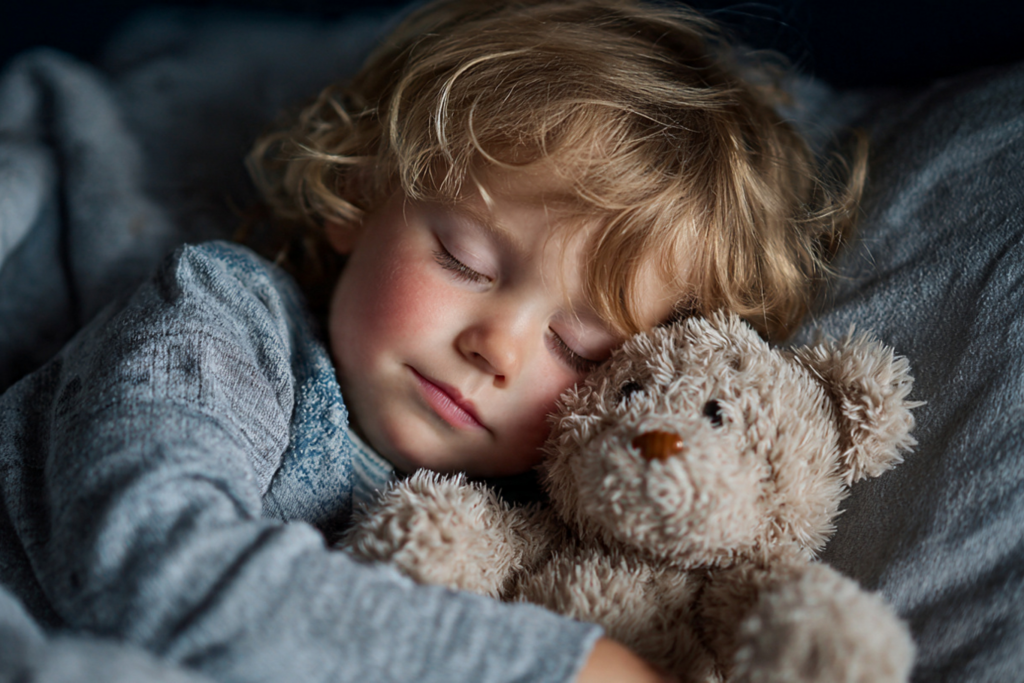

Many of you know that I’m a new dad again, which means I’ve been freshly reminded — at two and three in the morning, mostly — of just how important sleep is, and how hard it can be to come by, once there’s a new child in the house. We already talk plenty about the importance of sleep in adults, but it matters just as much, arguably more, for children and teenagers, whose growing bodies and developing brains depend on it in ways that go well beyond simply feeling rested. So I thought I’d use this issue to write about sleep in kids — how much they actually need at each age, the signs that a child isn’t getting enough, and what tends to help, along with an honest answer to the question every parent of a teenager eventually asks, which is why their once-easy sleeper now refuses to go to bed before midnight.
Why Is Healthy Sleep So Important for Children and Teens?
Sleep is not downtime for a developing brain and body; it’s when much of the real work of development happens. During deep sleep, the body releases the majority of its growth hormone for the day, which is one reason chronic sleep restriction has been associated with slower growth in young children. The brain also uses sleep to consolidate memory — moving what was learned or practiced during the day into longer-term storage — which is why sleep-deprived students often perform worse on tests even when they studied the material thoroughly.
Sleep plays an outsized role in emotional regulation, too: underslept children and teens are measurably more reactive to frustration and less able to read other people’s emotions, largely because sleep restriction blunts the connection between the brain’s emotional centers and the prefrontal cortex that keeps those reactions in check. Chronic short sleep in childhood has also been linked to higher rates of obesity, weakened immune function, and, in teens specifically, a higher risk of anxiety and depression. An occasional late night won’t cause lasting harm, but a consistent pattern of insufficient sleep touches nearly every system we care about as parents.
Sleep Needs by Age: How Many Hours of Sleep Do Kids Really Need?
The amount of sleep children need changes as they grow. The American Academy of Sleep Medicine and the American Academy of Pediatrics provide recommended hours of sleep that most physicians use as a general baseline, although individual children may need about an hour more or less. If you’re wondering, “How much sleep do kids really need?”, the age group below can help you understand the typical amount of sleep they need.
- Infants (4–12 months): 12–16 hours of sleep per 24 hours, including naps
- Toddlers (1–2 years): 11–14 hours of sleep per 24 hours, including naps
- Preschoolers (3–5 years): 10–13 hours of sleep per 24 hours, including naps. This is often when regular daytime naps begin to fall away.
- School-age children (6–12 years): 9–12 hours of sleep per night. This range is often underestimated, and a child who appears rested after eight hours may still not be getting enough sleep.
- Teenagers (13–18 years): 8–10 hours of sleep per night. Although their recommended amount is similar to that of school-age children, many teens get considerably less on school nights.
These recommended hours can provide a useful starting point for understanding whether your child is getting an appropriate amount of sleep for their age. The guidelines generally apply to healthy children without other sleep-disrupting conditions. Illness, growth spurts, stress, and other factors can temporarily increase the amount of sleep a child needs.
Why Do Teenagers Stay Up So Late?
Around the start of puberty, the timing of melatonin release — the hormone that signals it’s time to sleep — shifts later by roughly one to two hours. This is a genuine, measurable change in circadian rhythm, not a matter of willpower or stubbornness, though screens and schedules can make it worse.
A teenager whose brain isn’t releasing melatonin until closer to eleven at night isn’t being defiant by struggling to fall asleep at nine-thirty; their body simply isn’t ready yet. The trouble is that school start times haven’t shifted to match this biology, so most teens are asked to wake during what is, physiologically, still the middle of their night. Understanding this shift doesn’t mean bedtime rules should disappear, but the conversation goes better when it starts from the premise that a teen’s body clock has genuinely moved, rather than assuming the issue is purely behavioral.
How Can You Tell If Your Child Isn’t Getting Enough Sleep?
Total hours in bed is only part of the picture. Difficulty waking in the morning — needing multiple alarms or physical rousing — is one of the more reliable signs, since a truly rested child tends to wake with relatively little prompting. Irritability and a short fuse over minor frustrations is another, and it’s often mistaken for a behavioral issue rather than a sleep one.
Younger children paradoxically can become more wired or hyperactive when overtired rather than visibly sleepy, which is sometimes mistaken for attention issues. Falling asleep quickly in the car, during a movie, or in class is a fairly unambiguous sign of sleep debt. Declining grades, trouble concentrating, and more frequent minor injuries can trace back to insufficient sleep as well. When several of these show up together, sleep is worth investigating before other explanations.
The Impact of Screens and “Doomscrolling” on Sleep
Screens deserve their own mention, because they’ve become one of the biggest drivers of poor sleep in children and teens alike. The blue light from phones, tablets, and TVs suppresses melatonin release right when the body should be winding down, and the content itself — a video, a game, a group chat — tends to be alerting rather than calming. In teenagers, this often compounds into what’s now commonly called “doomscrolling”: an open-ended scroll through social media or news that has no natural stopping point, keeps the brain engaged well past the point of tiredness, and quietly eats into the hour that should have gone to sleep. It’s a major contributor to what sleep researchers call revenge bedtime procrastination — staying up late on a screen simply to reclaim a sense of free time the day didn’t otherwise allow.
The American Academy of Pediatrics’ general guidance is to avoid screens for the last hour before bed and to keep devices charging outside the bedroom overnight rather than within reach, since even a silenced phone on the nightstand invites a “quick check” that rarely stays quick. For younger children, that same one-hour screen curfew applies, along with keeping TVs and tablets out of the bedroom altogether. For teenagers, an outright ban is rarely realistic or sustainable, so a phone curfew tied to a specific time, agreed on together rather than imposed unilaterally, tends to work far better than confiscation after the fact.
How to Help Your Child Sleep Better
Most sleep problems in otherwise healthy children respond well to consistency — a less satisfying answer than a specific trick, but the single most effective intervention available. A consistent bedtime and wake time, including on weekends, does more to regulate a child’s circadian rhythm than nearly anything else; sleeping in until eleven on Saturday and Sunday shifts a child’s internal clock in a way that makes Monday harder, not easier. A calming wind-down routine thirty to sixty minutes before bed — reading, a bath, quiet conversation — signals to the body that sleep is coming, far more effectively than an abrupt transition from an active or stimulating activity into bed.
The sleep environment matters more than it’s often given credit for: dark, quiet, and on the cooler side, generally mid-60s to low-70s Fahrenheit.
Caffeine, which has crept into kids’ and teens’ diets through energy drinks and afternoon coffee runs more than most parents realize, has a half-life long enough that an afternoon dose can still affect sleep onset that night, so cutting it off by early afternoon is worth enforcing.
For teens specifically, some morning bright light exposure — opening the blinds or stepping outside briefly after waking — helps reinforce the sleep-wake cycle and can modestly counteract the delayed melatonin shift.
Do Children Still Need Naps?
Napping needs shift substantially over the first several years. Most infants nap multiple times a day; by eighteen months to two years, most have consolidated to a single one-to-two-hour afternoon nap. Somewhere between ages three and five, most children drop the nap entirely, though there’s real variability — some stop as early as two and a half, others still benefit through kindergarten.
A nap becomes a problem rather than a help once it starts interfering with nighttime sleep — if a napping child is consistently taking an hour or more to fall asleep at bedtime, shortening or dropping the nap is often the fix. School-age children and teens generally shouldn’t need regular naps; if one in this range is napping most days, that’s usually a sign nighttime sleep is falling short.
What Is a Good Bedtime for Children and Teens?
Rather than settling on a single number across the board, it’s more helpful to work backward from a fixed wake time, since that’s usually the less flexible end of the equation.
A school-age child up at seven who needs ten hours of sleep needs to be asleep, not just in bed, by nine — meaning a bedtime routine starting around eight-thirty.
For teenagers, working backward from an early wake time toward eight to nine hours of sleep often produces a bedtime that looks unrealistically early against their natural, delayed melatonin release — the exact tension driving so much adolescent sleep deprivation.
In practice, I encourage families to aim for the earliest bedtime a teen will realistically keep, treat it as a real commitment, and pair it with the wind-down and screen strategies above to help compensate for the biological delay rather than fight it directly.
What Are Common Sleep Problems in Children?
Sleep problems can look different at different ages, and some are a normal part of childhood development. Common issues include:
- Night waking: Night waking is developmentally normal in infants and can continue in a milder form into toddlerhood. It typically improves with consistent, calm responses.
- Bedtime resistance: Preschoolers and young school-age children often resist bedtime or try to delay going to sleep. A consistent routine with clear boundaries can usually help.
- Night terrors: Night terrors are different from nightmares. A child may appear distressed or scream while remaining largely unresponsive and typically has no memory of the episode afterward. They occur during deep non-REM sleep and are more common in preschool and early school-age children. There is generally no need to wake a child during a night terror, and most children outgrow them.
- Snoring and sleep apnea: Frequent or loud snoring, particularly when accompanied by pauses in breathing or gasping, can be a sign of obstructive sleep apnea. Enlarged tonsils or adenoids are a common contributing factor. Talk to your child’s doctor about persistent or concerning snoring rather than assuming it is simply a normal sleep habit.
- Restless legs: Some children have difficulty settling at bedtime because their legs feel “creepy” or “itchy.” Restless legs is a real but sometimes overlooked sleep problem and can occasionally be linked to low iron levels.
- Delayed sleep phase in teenagers: Teenagers commonly experience a shift in their body clock that makes them naturally want to fall asleep later and wake later. For some teens, this can become more significant, with difficulty falling asleep until very late and struggling to wake up for school. When this consistently interferes with daytime functioning, it may indicate a more significant sleep disorder.
Tips for Helping Your Child Get Better Sleep
Good sleep habits can make it easier for children to fall asleep, stay asleep, and get the rest they need. A few simple changes to your child’s routine can help support a healthy sleep cycle:
- Keep a regular sleep schedule: Try to have your child go to bed and wake up around the same time each day, including on weekends when possible.
- Create a calming bedtime routine: Reading, taking a bath, or listening to quiet music can help signal that it is time to wind down.
- Limit screens before bed: Avoiding phones, tablets, TVs, and other screens before bedtime can help your child’s body prepare for sleep.
- Make the bedroom sleep-friendly: Keep the room comfortable, quiet, and dark, with a temperature that is comfortable for your child.
- Encourage healthy daytime habits: Regular physical activity and time outdoors can support good sleep at night. Avoid caffeine and limit sugary drinks, particularly later in the day.
- Be consistent: Good sleep habits work best when they become part of your child’s regular routine. Consistency can help reinforce their sleep cycle and make bedtime more predictable.
Signs Your Child May Not Be Getting Enough Sleep
Most childhood sleep struggles are normal and often improve with consistent routines and good sleep habits. However, certain patterns are worth discussing with your child’s doctor.
- Loud or frequent snoring: Talk to a doctor if your child regularly snores, gasps or has pauses in breathing during sleep. These can be signs of sleep apnea, which can affect growth, behavior, and cardiovascular health.
- Persistent daytime tiredness: A child may need further evaluation if they seem to get enough hours of sleep but remain consistently tired, have trouble focusing or regularly fall asleep unintentionally during the day.
- Ongoing trouble falling or staying asleep: If significant sleep difficulties continue despite a consistent bedtime routine, particularly when they affect your child’s mood or school performance, it’s worth discussing them with a doctor.
- Sudden changes in sleep: Pay attention to unexplained changes in your child’s normal sleep pattern. If a child who previously slept well suddenly begins waking frequently, resisting bedtime, or sleeping significantly more or less than usual, it may be worth looking into.
When Should You Talk to a Doctor About Your Child’s Sleep?
You know your child’s usual sleep patterns better than anyone. If a noticeable change doesn’t resolve within a few weeks, bring it up at their next visit, or speak with their pediatrician sooner if it is affecting their daily functioning.
Sleep is an important part of overall child health, even though it may receive less attention than diet or screen time. If you’re concerned about your child’s sleep, bringing it up at a routine visit is a common and appropriate place to start.
Read Also: Encourage Your Valentine To Focus On Their Heart Health This American Heart Month
If you’re in the Bay Area and have questions about your child’s sleep, The Village Doctor can help you understand what’s normal, identify potential concerns, and develop a personalized approach to support healthy sleep. Contact The Village Doctor today at (650) 851-4747 or Contact us to schedule a consultation and discuss your child’s sleep and overall health.