

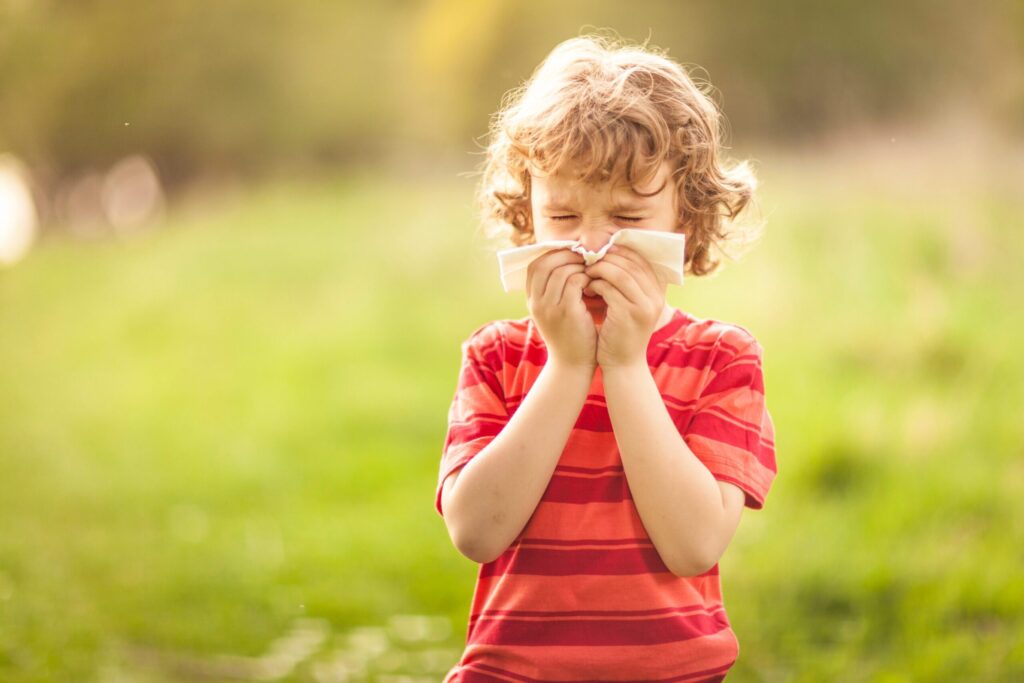

It’s the middle of summer, and your child can’t stop sneezing. Their nose is stuffy, their eyes are watery, and you’re wondering: is this a summer cold, or could it be allergies? You’re not alone — millions of families face this exact question every year. The symptoms of summer allergies and the common cold overlap so much that even the most attentive parents don’t know how to tell if it’s allergies or a cold. The good news is that a few key clues can help you figure out what’s going on — and what to do about it.
What Causes Summer Allergies?
Summer allergies — sometimes called hay fever or seasonal allergies — are triggered when the immune system overreacts to normally harmless substances in the air. The most common summer allergens include:
- Grass pollen: Grasses like Bermuda, Timothy, and Kentucky bluegrass release pollen throughout the summer months and are one of the top triggers for seasonal allergies.
- Weed pollen: Weeds such as ragweed begin pollinating in late summer and can cause symptoms well into the fall.
- Mold spores: Warm, humid summer weather encourages mold growth outdoors (in soil, compost, and decaying leaves) and indoors (in damp basements and bathrooms). Mold spores float through the air much like pollen.
In the United States, pollen allergy season typically runs from March through October, and research shows that the season has been getting longer — by about 20 days over the last 30 years — due to warmer temperatures and increased pollen production. That means more days of potential allergy symptoms for your family.
Pollen counts tend to be highest on warm, dry, windy days and in the early morning hours. Rain can temporarily wash pollen out of the air, but mold spore counts often rise after rainfall.
Allergies vs. a Cold: How to Spot the Difference
Summer allergies and the common cold share several symptoms, including sneezing, nasal congestion, a runny nose, and even a sore throat (from postnasal drip). So how can you tell them apart? Here are the key differences:
- Itchy eyes, nose, or throat: This is one of the hallmark signs of allergies and is rarely caused by a cold. If your child’s eyes are itchy, red, and watery, allergies are the more likely culprit.
- Fever and body aches: Allergies do not cause a fever. If your child has a temperature or complains of body aches, a cold (or another infection) is more likely.
- Nasal discharge: Allergies typically produce clear, thin, watery nasal discharge. A cold may start with clear discharge but often progresses to thicker, yellow, or greenish mucus.
- Duration of symptoms: A cold usually runs its course in 7 to 14 days. Allergy symptoms, on the other hand, can persist for weeks or even months — as long as the allergen is present in the environment.
- Pattern and timing: Allergy symptoms tend to follow a predictable pattern, flaring up at the same time each year or worsening after time spent outdoors. Cold symptoms come on more suddenly and don’t follow a seasonal pattern.
- Sneezing: Both conditions cause sneezing, but allergy-related sneezing often comes in rapid-fire bursts, especially after exposure to an allergen.
When Should You See a Doctor?
Most summer allergy symptoms can be managed at home, but there are times when it’s important to seek medical advice:
- Symptoms last more than two weeks and are not improving, which makes a simple cold less likely.
- Symptoms worsen over time or are significantly affecting your child’s sleep, school performance, or daily activities. Research shows that poorly controlled allergies can lead to fatigue, difficulty concentrating, and even anxiety in children.
- Over-the-counter medications aren’t helping, or your child is experiencing side effects from them.
- New symptoms develop, such as facial pain or pressure, high fever (102°F or higher), or thick, discolored nasal discharge lasting more than a few days — these could be signs of a sinus infection that may need further evaluation.
- Your child has asthma and allergy symptoms seem to be making breathing more difficult. Allergic rhinitis and asthma are closely linked, and up to 40% of people with allergic rhinitis have or will develop asthma.
- You’re unsure whether it’s allergies or something else. A doctor can perform simple tests — such as a skin prick test or a blood test for specific allergen antibodies — to confirm whether allergies are the cause.
Managing Summer Allergies
If your child does have summer allergies, there are many effective ways to reduce symptoms and help them enjoy the season:
Reduce allergen exposure:
- Check local pollen counts and try to limit outdoor time on high-pollen days, especially in the early morning.
- Keep windows closed at home and in the car during peak pollen season, and use air conditioning instead.
- Have your child shower and change clothes after playing outside to wash away pollen.
- Use a saline nasal rinse (with distilled or sterilized water) to help flush allergens from the nasal passages.
Over-the-counter medications:
- Non-drowsy antihistamines such as cetirizine (Zyrtec), loratadine (Claritin), or fexofenadine (Allegra) can help relieve sneezing, itchy eyes, and a runny nose. These are preferred over older antihistamines like diphenhydramine (Benadryl), which can cause drowsiness.
- Nasal corticosteroid sprays such as fluticasone (Flonase) or triamcinolone (Nasacort) are among the most effective treatments for nasal congestion and are available without a prescription. They work best when used consistently throughout allergy season.
- Antihistamine eye drops can provide targeted relief for itchy, watery eyes.
When to consider prescription options:
If over-the-counter treatments aren’t enough, your doctor may recommend prescription-strength nasal sprays, combination therapies, or allergy testing to identify specific triggers. For children with persistent or severe allergies, allergen immunotherapy (allergy shots or sublingual tablets) may be discussed as a longer-term solution.
Don’t Let Your Spring Allergies Ruin Your Summer
Summer should be a time for your family to enjoy the outdoors — not a season spent battling mystery symptoms. The key differences to remember: allergies cause itchy eyes, nose, and throat, produce clear nasal discharge, never cause a fever, and tend to last as long as the allergen is around. Colds bring on body aches, sometimes a fever, thicker nasal discharge, and typically resolve within two weeks.
If you’re ever unsure whether your child’s symptoms are caused by summer allergies or a cold, don’t hesitate to reach out to our office. We can help identify the cause, recommend the right treatment plan, and make sure your child gets back to enjoying their summer.
Sky Pittson, MD, July, 2026
If seasonal allergies are making it harder to enjoy life in the Bay Area, you don’t have to manage your symptoms alone. At The Village Doctor, our team provides personalized allergy care to help you identify triggers, reduce symptoms, and feel your best throughout every season. Whether you’re dealing with spring pollen, grass allergies, or year-round congestion, we’re here to help you breathe easier. Contact The Village Doctor today (650) 851-4747 or Contact us to schedule an appointment and take control of your seasonal allergies with compassionate, comprehensive care close to home.